
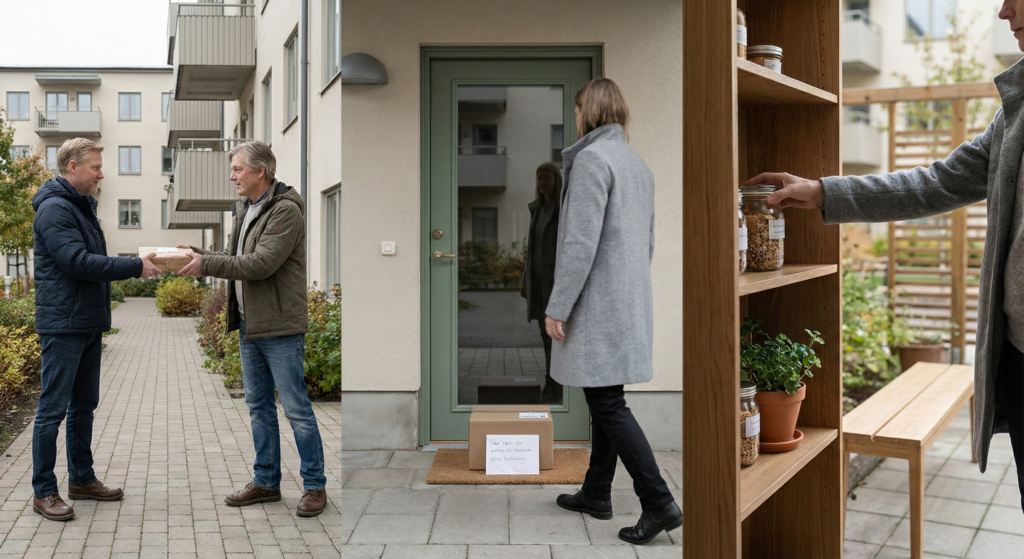
Why Swedes Don’t Like “Free” But Love Sharing
In many countries, the word “free” is a selling point.
In Sweden, it often isn’t.
“Free” can feel awkward.
Suspicious.
Even slightly embarrassing.
And yet — Sweden is one of the strongest sharing cultures in the world.
How does that make sense?
It starts with dignity
In Sweden, people don’t want handouts.
They want things to make sense.
Sharing works here not because it’s cheap, but because it’s reasonable.
- Why throw something away if someone else can use it?
- Why buy new when something perfectly fine already exists?
- Why make a big deal out of something simple?
Sharing is not charity.
It’s quiet efficiency.
The Swedish logic of “lagom”
There’s a word that explains this better than any campaign ever could:
lagom — not too much, not too little.
Lagom applies to objects too.
Keeping things you don’t need anymore is “too much”.
Throwing away usable things is also “too much”.
Passing them on is… lagom.
No praise needed.
No guilt required.
Just balance.
Why this matters in 2026
As prices rise and sustainability fatigue grows, people are tired of being told to care more.
They don’t want lectures.
They want systems that fit naturally into everyday life.
That’s why sharing is growing quietly in Sweden:
- In student corridors
- In laundry rooms
- In apartment buildings
- In WhatsApp groups and local communities
Not because it’s trendy.
But because it works.
The future of sharing won’t be loud
It won’t come with slogans or big promises.
It will look like:
- Someone leaving a bag of clothes instead of throwing them away
- An extra portion of food finding a home
- A game, a cable, a detergent bottle moving hands
No likes.
No applause.
Just less waste — and a bit more common sense.
And in Sweden, that’s often the strongest signal of all.
Team Deela